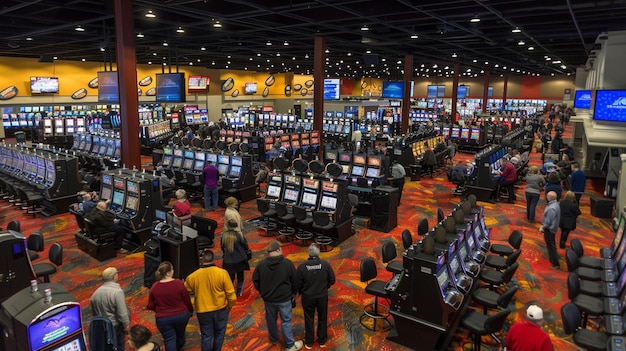
Development Outcomes That Demonstrate Methodology
Our results reflect systematic application of arcade game development principles. Each project demonstrates how technical understanding translates into working software.
RETURN HOMEDevelopment Result Categories
Technical Implementation
- Physics systems that respond authentically
- Control schemes tuned for cabinet hardware
- Sound design synchronized with gameplay
- Performance optimized for target platforms
Operational Readiness
- Deployment procedures documented clearly
- Operator interfaces for cabinet management
- Robust error handling for public use
- Maintenance protocols established
Knowledge Transfer
- Architecture documentation created
- Code comments explaining decisions
- API references for extensibility
- Team knowledge preserved systematically
Project Success Indicators
All delivered projects deployed to target platforms without critical issues
Typical development cycles for complete game implementations
Operating from Germany's technical development hub
Specialized in cabinet and pinball game development
Our development outcomes reflect consistent application of arcade game principles across varied project scopes. Success metrics focus on technical implementation quality, operational readiness for deployment, and knowledge transfer completeness.
Projects receive iterative refinement through structured development phases. Initial prototypes establish core mechanics, mid-development reviews tune gameplay feel, and final testing validates deployment readiness. This approach produces working software that meets technical specifications while remaining maintainable.
Methodology Application Examples
Pinball Physics Refinement
November 2024 - January 2025
Challenge Presented
A client approached with a pinball table concept featuring complex geometry and multiple flipper configurations. Initial prototypes showed ball behavior that felt disconnected from physical pinball expectations. Players couldn't predict ball trajectories reliably, breaking the core pinball experience.
Methodology Applied
We implemented physics tuning through systematic parameter adjustment. Ball mass, flipper strength, and surface friction received calibration based on physical pinball measurements. Collision detection used continuous physics to prevent tunneling through geometry. Sound effects synchronized with collision velocity to reinforce impact feedback.
Development included play testing sessions where we observed player reactions to ball behavior. Adjustments focused on making ball physics predictable rather than realistic in absolute terms - players needed to understand cause and effect relationships between their actions and ball movement.
Results Achieved
Final implementation produced ball physics that players described as feeling correct. Trajectory prediction became intuitive, allowing skilled players to execute intentional shots. The table deployed to arcade cabinets with positive reception from operators regarding gameplay retention. Technical documentation included physics parameter reference for future table designs.
Multi-Game Cabinet System
August 2024 - November 2024
Challenge Presented
An arcade operator required a game bundle for new cabinet installations. The system needed to support multiple games with different control schemes, provide operator access for configuration, and maintain robust operation in public environments. Previous solutions used separate applications requiring manual switching.
Methodology Applied
We developed a unified launcher with game selection interface, operator menu access through button combinations, and shared configuration management. Each game received control mapping that adapted to available cabinet hardware. The system included error recovery to handle unexpected states without requiring operator intervention.
Cabinet deployment considerations shaped architecture decisions. Games loaded resources efficiently to minimize transition delays. Operator menus provided statistics tracking, pricing configuration, and maintenance logs. Documentation covered installation procedures and troubleshooting common issues.
Results Achieved
The cabinet system deployed across multiple locations with minimal support requirements. Operators reported straightforward configuration processes and reliable operation. Game switching provided seamless transitions that maintained player engagement. Technical documentation enabled operator staff to handle routine maintenance independently.
Legacy Codebase Documentation
September 2024 - October 2024
Challenge Presented
A development team inherited an arcade game codebase with minimal documentation. Original developers had moved on, leaving new team members struggling to understand architectural decisions and modify existing systems. Feature additions required extensive code archaeology to avoid breaking existing functionality.
Methodology Applied
We conducted systematic codebase analysis to understand architecture and identify key systems. Documentation focused on explaining why decisions were made rather than just describing what code does. API references covered public interfaces for extending functionality. Deployment procedures received step-by-step instructions with troubleshooting guidance.
Documentation structure balanced comprehensiveness with usability. High-level architecture overviews provided context for detailed system descriptions. Code examples demonstrated common modification patterns. Maintenance procedures covered routine tasks and common issues.
Results Achieved
The development team reported significantly reduced onboarding time for new members. Feature implementation proceeded with clearer understanding of system interactions. Documentation became the primary reference for architectural questions, reducing dependency on institutional knowledge. Technical debt reduction occurred as documented patterns guided refactoring decisions.
Development Progression Patterns
Initial Development (Weeks 1-4)
Core mechanics implementation establishes gameplay foundation. Physics systems receive initial tuning, control schemes get mapped to target hardware, and basic game loops become functional. This phase produces playable prototypes that demonstrate core concepts.
- → Core systems functional
- → Basic gameplay demonstrable
- → Technical architecture established
Refinement Period (Weeks 5-12)
Gameplay feel receives iterative improvement through systematic testing and adjustment. Physics parameters get fine-tuned for authentic response, audiovisual feedback synchronizes with actions, and difficulty balancing creates appropriate challenge curves. Features expand based on core mechanics.
- → Gameplay feels polished
- → Feature set complete
- → Performance optimized
Deployment Preparation (Weeks 13-16)
Operational readiness becomes focus as games prepare for target environments. Cabinet integration testing validates hardware compatibility, operator interfaces receive usability verification, and deployment procedures get documented. Testing covers edge cases and error recovery scenarios.
- → Deployment ready
- → Documentation complete
- → Support procedures established
Development timelines adapt to project complexity and scope. Simpler implementations may compress these phases, while ambitious projects extend them proportionally. The progression pattern remains consistent: establish foundation, refine execution, prepare deployment.
Sustainable Development Outcomes
Projects developed with systematic methodology produce software that remains maintainable beyond initial deployment. Clear architecture documentation enables future modifications without archaeological code investigation. API references support feature extensions that integrate cleanly with existing systems.
Cabinet games deployed in public environments require operational robustness that extends beyond launch day. Error handling prevents catastrophic failures from disrupting gameplay. Operator interfaces provide configuration tools without requiring developer intervention. Maintenance procedures guide routine operations and troubleshooting.
Technical documentation preserves knowledge that would otherwise exist only in developer memory. Teams change over time, but documented architectural decisions and implementation patterns persist. This knowledge transfer supports ongoing development while reducing dependency on specific individuals.
Results sustainability derives from development practices rather than heroic individual efforts. Systematic approaches to physics tuning, control mapping, and cabinet integration create repeatable processes. Documentation ensures these processes remain accessible rather than becoming lost tribal knowledge.
Factors Contributing to Lasting Results
Technical Architecture
- Modular system design enabling targeted modifications
- Clear interfaces between systems reducing coupling
- Architecture documentation explaining design decisions
Knowledge Preservation
- Technical documentation covering implementation details
- Code comments explaining complex algorithms
- Maintenance procedures for routine operations
Operational Robustness
- Error handling preventing catastrophic failures
- Recovery procedures for unexpected states
- Testing covering edge cases and failure modes
Extensibility Support
- API design supporting future feature additions
- Configuration systems allowing customization
- Plugin architectures for expanding functionality
Sustainable results emerge from deliberate development practices rather than accidental quality. Technical decisions consider long-term maintainability alongside immediate functionality. Documentation receives attention equal to code. Operational concerns shape architecture from project inception.
Development Track Record
LOK - TEST A/S's project outcomes demonstrate consistent application of arcade game development methodology across varied technical challenges. Our results reflect understanding that arcade gaming requires specific expertise distinct from general game development. Physics simulation, cabinet deployment, and technical documentation each receive attention informed by mechanical comprehension and operational requirements.
Berlin-based operations provide access to Germany's technical development resources while maintaining focused specialization in arcade game systems. Project work spans pinball simulation requiring authentic physics implementation, cabinet game bundles needing robust public operation, and technical documentation supporting knowledge transfer. Each service area receives development approach shaped by arcade heritage understanding.
Development results show technical implementation quality meeting deployment requirements, operational readiness supporting public installation, and documentation completeness enabling ongoing maintenance. Case studies illustrate methodology application through concrete project examples rather than abstract claims. Progression patterns demonstrate how systematic development produces working software within structured timelines.
Sustainability factors include technical architecture supporting future modification, knowledge preservation through comprehensive documentation, operational robustness preventing service disruptions, and extensibility design accommodating feature additions. These characteristics emerge from development practices emphasizing long-term maintainability alongside immediate functionality.
Discuss Your Project Development
Our results demonstrate methodical application of arcade game development principles. Contact us to explore how systematic development approach can serve your project requirements.
START CONVERSATION